

Galaxy Z TriFold 2: Release Date & Specs
The Galaxy Z TriFold 2 targets ~8.9mm folded and a mid-2027 launch — a case designer breaks down the specs, the hinge, the S Pen patent, and why your Gen 1 case...
Cases engineered
for the fold.
3 foldable-specialist designs — magnetic, hinge-cover, slim & S-Pen — each moulded to your exact model, not adapted from a slab-phone case.
Shop all 3 cases Swipe to explore →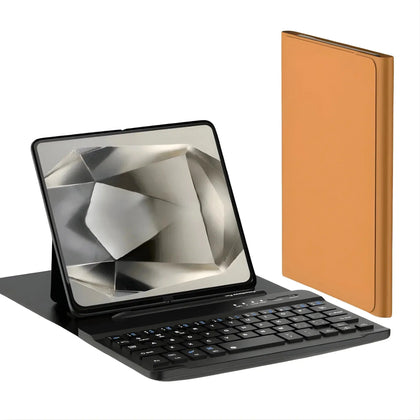
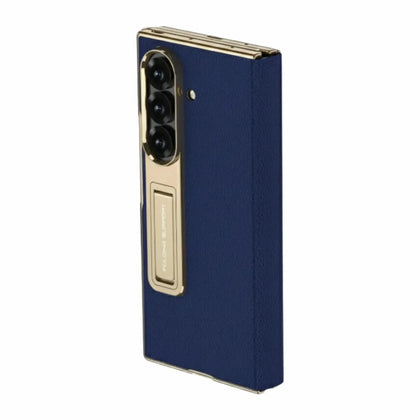
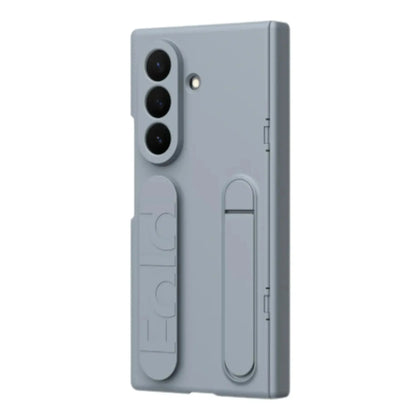
Full disclosure: we design and sell foldable cases — including two cases built specifically for the first Galaxy Z TriFold — so when a second-generation tri-fold leaks, we read the spec sheet as the people who will have to tool a case around it. That cuts both ways. We want you buying a foldable, but we have zero reason to oversell a device that is still 13–14 months away and entirely unannounced. This is what the leaks actually say, what they mean for protection, and whether you should wait. Last updated: 15 June 2026.
Here is the thing every other "Z TriFold 2 release date" article gets wrong: they treat the spec rumours as the story. For us, the story is geometry. A tri-fold that drops from 12.9mm to a target of ~8.9mm folded isn't a spec bump — it's a complete re-engineering of how the device stacks, and it tells you exactly why your current TriFold case will be landfill on launch day. Below, we answer the questions a buyer actually has, from a bench that has measured hinge tolerances on every Samsung foldable since the Z Fold 4.
1. When does the Galaxy Z TriFold 2 actually launch?
Mid-2027 is the credible target — not 2026. Three independent Korean sources (a supply-chain leak via GSMArena on 18 March 2026, a Naver-blog corroboration, and Geeky Gadgets' development tracking) all converged on a mid-2027 window. Samsung's foldable Unpacked events traditionally land in July, so realistically that means a July 2027 announcement with shelves in August–September 2027. Nothing is official, but three sources agreeing is as solid as pre-launch foldable rumours get. The tell that makes us believe it: the new hinge reportedly cleared early verification testing in March 2026, and in Samsung's cycle hinge verification is one of the last engineering gates before a design is frozen — a 12–16 month path to production fits mid-2027 neatly.
2. How thin is ~8.9mm really — and why should a case buyer care?
~8.9mm folded would put a three-panel device at roughly the same thickness as a folded Galaxy Z Fold 7, which is genuinely hard to believe. That is a 4mm cut from the Gen 1's 12.9mm — about 31% thinner. To put it in hand terms: the first TriFold folded down to the thickness of a chunky wallet, and every reviewer flagged it as the reason it never left the house. Getting three display panels, two hinges and a 5,600mAh-class battery into an 8.9mm stack means thinner ultra-thin glass, a shallower hinge mechanism, thinner battery cells and carbon-fibre-reinforced structure instead of heavier metal. For us, thinner is the hardest possible brief: every millimetre we add as protection is a millimetre Samsung's engineers fought to remove, so a Gen 2 case has to protect the spine without undoing the entire point of the device.
3. Samsung killed the first TriFold after 60 days. Is the line dead?
No — the discontinuation was the plan, not a failure. The Gen 1 launched 30 January 2026 at US$2,899, shipped an estimated 100,000–200,000 units across five markets, and was pulled by March. That reads like a flop until you understand it was a halo device: a deliberately limited run to plant a flag in the tri-fold category and harvest real-world hinge and durability data before building the version Samsung actually wants to sell at scale. It is the same playbook as the original 2019 Galaxy Fold → Z Fold 2 jump, just on a tighter 18-month clock. The successor is already in active development, which is the opposite of a dead line.
4. What is actually new in the redesigned hinge?
The hinge is the single most important change, and it is the part we care about most. The Gen 1 used a first-generation dual "Armor FlexHinge," and there were real reports of hinge reliability issues — exactly the kind of data a halo run exists to collect. The Gen 2 hinge has reportedly already passed early verification, which in Samsung's process means it has survived fold/unfold cycle testing (typically 200,000+ cycles), temperature and humidity stress, and drop simulation. Why is a tri-fold hinge so hard? It has to flex to the same angle as a normal foldable hinge, but twice, simultaneously, holding parallel alignment across both fold lines for the life of the device. Tiny manufacturing variance across two hinges compounds into visible misalignment over time. For a case designer this matters because a hinge cover has to add rigidity at the spine without binding either fold — the failure mode we see most often in cheap universal-fit cases is exactly this: they bridge the spine and jam the fold.
5. Will the Z TriFold 2 finally get S Pen support?
Possibly — and if it does, it changes what the device is for. Samsung filed two relevant patents in 2026: one for a stylus input method that does not need the traditional digitizer layer (the layer that adds roughly 0.3–0.5mm and got dropped from the Z Fold 7 precisely because of that thickness cost), and one for an S Pen that attaches magnetically to the frame rather than living in a slot. If that reaches production, the TriFold 2 becomes the first foldable with S Pen on a ~10-inch canvas without the thickness penalty — closer to an iPad Pro than to any phone Samsung has shipped. Patents are not products, so treat this as a rumour with engineering momentum behind it. From the case side, a frame-mounted magnetic pen means the case has to leave the magnetic attachment zone clear and ideally carry its own pen retention — the same problem we already solve on Z Fold S-Pen cases like the Sync M1 MagSafe hinge case with S-Pen holder.
6. What will the Z TriFold 2 cost in Australia?
No price has leaked, but expect it to land below the Gen 1 — somewhere around the US$2,199–$2,599 range, which is roughly A$3,400–A$4,000 at current exchange. The Gen 1's US$2,899 (very roughly A$4,400 landed) reportedly sat on a bill of materials north of US$2,000, meaning almost no margin. A wider production run spreads tooling and panel costs across more units, the redesigned hinge may use cheaper CFRP rather than titanium elements, and Samsung Display has a full development cycle of tri-fold panel learning behind it. All of that points to a lower retail price. The floor stays high, though: Samsung will position it above the Z Fold 8 (US$1,999, roughly A$3,000), so do not expect a bargain — expect "slightly less eye-watering."
7. Will your current Galaxy Z TriFold case fit the TriFold 2?
No. Don't plan on it. A ~4mm thinner fold stack and a redesigned hinge mean completely different external geometry — the cutouts, the spine depth and the fold clearances all move. This is the most reliable prediction in this entire article, because it is physics, not rumour. The same rule held every time Samsung re-engineered a foldable's thickness, and it will hold here. If you own the first TriFold today, protect it now with a case actually built for its 12.9mm body — our Aegis T1 hinge case with built-in screen protector for the Galaxy Z TriFold and the Axis T1 dual-layer hinge case with multi-angle kickstand are the two we'd point you to — and treat a TriFold 2 case as a separate purchase you'll make in 2027.
8. Buy the Gen 1 now, wait for Gen 2, or get a Z Fold 8 instead?
For most people: get a Z Fold 8 in 2026 and revisit the tri-fold in 2027. Here's our honest split. Buy the Gen 1 TriFold only if you genuinely need a 10-inch tri-fold today, can live with 12.9mm and 309g in your pocket, and you can still find one — it's a collector's piece now. Wait for the Gen 2 if the thickness and weight were your dealbreakers, you want the redesigned durable hinge, and the possible S Pen on a 10-inch display is the dream — just know "wait" means ~14 months. Buy the Z Fold 8 (launching around 22 July 2026) if you need a foldable this year, the ~A$1,400 saving versus a TriFold 2 matters, an 8-inch inner screen is enough, and you want a mature case ecosystem on day one rather than first-generation tri-fold engineering.
9. What does a thinner tri-fold mean for how we design its case?
It forces every protection decision to fight for its millimetre. When the device itself is ~8.9mm, you cannot wrap it in 2mm of TPU on every face without turning a A$3,500 engineering marvel back into a brick — you'd erase the entire upgrade. So a good TriFold 2 case will be selective: rigid where it counts (the two hinge spines and the corners that take drop energy) and barely-there everywhere else. Two fold lines also mean two crease zones and two flex axes, so the case has to break into segments that move with the device instead of one shell that fights it. This is exactly why we keep saying foldable cases are a specialist's job — a flat-phone case maker can get away with a one-piece shell; a tri-fold cannot.
10. Where does the TriFold 2 sit in Samsung's 2026–2027 roadmap?
At the very top. The near-term wave is the Z Fold 8, Z Wide Fold and Z Flip 8, all expected around 22 July 2026. Then 2027 brings the Z Fold 9 (the refined, pocketable pick) and the Z TriFold 2 as the crown jewel above it in both price and ambition. Further out, Samsung is reportedly exploring a "Galaxy Z Slide" with a slidable OLED for late 2027 to early 2028 — very early, treat it as concept exploration. The takeaway for a buyer: if you want the most ambitious foldable Samsung makes and can wait, the TriFold 2 is it; if you want the best single-fold phone, that's the Fold line.
Galaxy Z TriFold 2 FAQ
When is the Samsung Galaxy Z TriFold 2 release date?
Mid-2027 is the leaked target, most likely a July 2027 Unpacked announcement with availability around August–September 2027. It comes from three independent Korean sources reporting in March 2026 and is reinforced by the new hinge passing early verification that same month. Samsung has not officially confirmed anything, so treat the window as a credible leak rather than a fixed date.
How thick is the Z TriFold 2 compared to the first TriFold?
The target is approximately 8.9mm folded, down from 12.9mm on the Gen 1 — a 4mm or roughly 31% reduction that would put it near a folded Galaxy Z Fold 7. Achieving that on a three-panel device requires thinner glass, a shallower hinge, thinner battery cells and carbon-fibre structure. It is the most aggressive engineering target in the device.
Will the Z TriFold 2 have S Pen support?
Maybe. Samsung filed patents in 2026 for a digitizer-free stylus method and a magnetic frame-mounted S Pen, both of which would suit a tri-fold without the thickness penalty that pushed the S Pen off the Z Fold 7. Patents signal engineering intent, not a guaranteed feature, so this remains a well-supported rumour.
Will Gen 1 Galaxy Z TriFold cases fit the TriFold 2?
No. The dramatically thinner ~8.9mm profile and redesigned hinge change the external geometry, so cutouts and clearances won't line up. Plan on a dedicated TriFold 2 case in 2027 and keep your current case for your current device.
How much will the Z TriFold 2 cost in Australia?
Nothing is confirmed, but the leaked US$2,199–$2,599 estimate works out to roughly A$3,400–A$4,000 at current exchange — likely cheaper than the Gen 1's US$2,899 thanks to wider production and component maturation, but still positioned above the Z Fold 8. Final Australian pricing will depend on Samsung's local RRP and the exchange rate at launch.
Should I wait for the Z TriFold 2 or buy a Z Fold 8 now?
If you need a foldable before mid-2027, buy the Z Fold 8 — it lands around 22 July 2026 with a mature case ecosystem and a far lower price. Wait for the TriFold 2 only if you specifically want a 10-inch tri-fold, the slim redesign, and the possible S Pen, and you can hold out about 14 months.
The honest summary
The Galaxy Z TriFold 2 looks like the version Samsung actually meant to sell: a mid-2027 launch, a ~8.9mm folded target that nearly matches a Z Fold 7, a verified redesigned dual hinge that directly addresses Gen 1's reliability complaints, a credible shot at S Pen on a 10-inch screen, and a likely price drop into the A$3,400–A$4,000 range. For most buyers the smart move is a Z Fold 8 in 2026 and a hard look at the TriFold 2 in 2027. And whatever you choose, plan for a new case — the one certainty here is that a 4mm-thinner, re-hinged tri-fold will not fit anything built for the Gen 1. We'll have a dedicated TriFold 2 fit ready when the real dimensions land.
Related Galaxy Z Fold guides
- Best Galaxy Z TriFold cases in 2026: the two that actually fit
- Galaxy Z Fold 8 rumor tracker (2026): what's confirmed, what's likely, what's wishful thinking
- Galaxy Z Fold 7 → Z Fold 8: a case designer's diff (and what will still fit)
- Galaxy Z Fold S-Pen in 2026: which models support it and how to carry your stylus
FoldifyCase
Part of the FoldifyCase editorial team — covering Samsung Galaxy Z Fold, Z Flip, Google Pixel Fold, and foldable phone accessories.
Shop FoldifyCase foldable phone cases
Precision cases for Galaxy Z Fold & Z Flip — full MagSafe, S-Pen ready, zero bulk.